


 Until the announcement of the iPhone 5s' finger print scanner or 'Touch ID', you were more likely think of Biometric technologies at an airport or with your passport than on your phone. That's because historically, the technology has only really consistently made mainstream news when added or adopted to immigration procedures and passports, normally holding facial data and/or fingerprints. Despite this, biometric identification has evolved and made its way to a variety of locations in the last decade, from to Disneyland's fingerprinting on entry to identifying high value customers in retail and even processing payment with your face alone.
However, the opportunities such technology can provide are
counterbalanced by concerns about privacy and data security, as the
possibilities for widespread consumer biometric uses are consistently
dogged by concerns about who stores your data.
Until the announcement of the iPhone 5s' finger print scanner or 'Touch ID', you were more likely think of Biometric technologies at an airport or with your passport than on your phone. That's because historically, the technology has only really consistently made mainstream news when added or adopted to immigration procedures and passports, normally holding facial data and/or fingerprints. Despite this, biometric identification has evolved and made its way to a variety of locations in the last decade, from to Disneyland's fingerprinting on entry to identifying high value customers in retail and even processing payment with your face alone.
However, the opportunities such technology can provide are
counterbalanced by concerns about privacy and data security, as the
possibilities for widespread consumer biometric uses are consistently
dogged by concerns about who stores your data. Monday, 23 September 2013
Can the iPhone 5s push biometrics into mass appeal?
Until the announcement of the iPhone 5s' finger print scanner or 'Touch ID', you were more likely think of Biometric technologies at an airport or with your passport than on your phone. That's because historically, the technology has only really consistently made mainstream news when added or adopted to immigration procedures and passports, normally holding facial data and/or fingerprints. Despite this, biometric identification has evolved and made its way to a variety of locations in the last decade, from to Disneyland's fingerprinting on entry to identifying high value customers in retail and even processing payment with your face alone.
However, the opportunities such technology can provide are
counterbalanced by concerns about privacy and data security, as the
possibilities for widespread consumer biometric uses are consistently
dogged by concerns about who stores your data. 

Tuesday, 10 September 2013
3D printing is becoming more tangible and so are its copyright problems
 3D printing, like many emerging technologies, is a great
opportunity slowly finding a myriad of problems to solve. The decreasing costs and
increasing quality of 3D printers, driven by groups ranging from Makerbot and Formlabs
down to Maplin’s
budget Velleman K8200, has meant that the hardware is becoming increasingly
accessible. Companies such as UPS are also
increasingly focusing on making 3D printing accessible through their
network of locations, negating the need for hardware investment. Meanwhile
websites such as Thingiverse and technology such as 3D digitizers and extrapolation
technology are creating more and more things of which to print and
innovators are creating the amazing and the worrying. With operating system support
coming in version 8.1 of Windows 8 and brands such as DVV,
Amazon,
Nokia
3D printing, like many emerging technologies, is a great
opportunity slowly finding a myriad of problems to solve. The decreasing costs and
increasing quality of 3D printers, driven by groups ranging from Makerbot and Formlabs
down to Maplin’s
budget Velleman K8200, has meant that the hardware is becoming increasingly
accessible. Companies such as UPS are also
increasingly focusing on making 3D printing accessible through their
network of locations, negating the need for hardware investment. Meanwhile
websites such as Thingiverse and technology such as 3D digitizers and extrapolation
technology are creating more and more things of which to print and
innovators are creating the amazing and the worrying. With operating system support
coming in version 8.1 of Windows 8 and brands such as DVV,
Amazon,
Nokia
Wednesday, 28 August 2013
Telepresence and Advertising: Short Term Gimmick, Possible Long Term Opportunity
Telepresence robots have long been the domain of the back of
the business section news article, covering various advancements made by Cisco
and others in creating a viable
robotic solution to working from home but being in the office. More often than
not however, the reality of such solutions has been derided over adopted, as in
sitcoms such as the ‘Big Bang Theory’. While guiding a robot around the office
and video conferencing on the fly may not be common place, or even free from
ridicule, the technology has recently been implemented in two interesting
advertising campaigns by San Pellegrino and Coca-Cola Israel.
San Pellegrino’s ‘3 Minutes in Italy’ campaign utilized telepresence robots to allow Facebook users to control a sandwich boarded and branded robot as they explore the village of Taormina in Sicily. Users were able to interact with locals through video conference, with audio being automatically translated, as they were given a guided tour of the city. The campaign also offered live video from a drone of the city from the sky, but clearly the main attraction here was the ability to interact with the locals. The campaign, while arguably limiting its scale, used telepresence to bring to life the Italian brand values conveyed by San Pellegrino in a novel and engaging way.
Coca-Cola Israel
recently deployed similar technology to allow Israeli teenagers to attend
their ‘Summer of Love’ festival when not able to go in person. The robots were
similar in set-up to San Pellegrino’s campaign, but allowed users to travel
around the music festival, interact with festival-goers and watch bands. The
campaign generated PR coverage for both the festival and the brand in a way
that extended the technology’s use.
For both campaigns, the issue of scalability quickly
relegates the use of telepresence to a gimmick on first look, despite the
possibility for earned media and PR amplification. Though scalability isn’t
likely to be overcome in any use of telepresence advertising, campaigns such as
San Pellegrino highlight the opportunities for long-term use over more tactical
activations such as Coca-Cola. Using robots to bring consumers to the home of
San Pellegrino, if only for a limited campaign this time, highlights how
brand values can be brought to life through this novel experience for web
users in longer ways. Going forward, similar technology could be used to bring other destinations to life consistently, from luxury car factories for perspective buyers
online or in dealership, to possible hotel guests examining a resort, with
scale coming from long term consistent usage of the tech. Any brand with a location to bring to life, and the time to organize a feasible amount of engagement, could consider a possible telepresence solution. So while cowboy hat wearing robots might not be ferrying Jack Daniel's enthusiasts around Lynchburg anytime soon, it isn't beyond the realm of possibility.
Monday, 19 August 2013
How Smart Watches Can Succeed: By Knowing What Not To Offer...
 Growing up, I saw the movie 'Dick Tracy' and as most kids who saw his wrist watch phone, I really wanted one of my own. This was a case of expectation and reality not quite meeting up, as the watch I ended up getting from the 90's Toys-R-Us was less the size of a time piece and more a full sized 'walkie-talkie' with a velcro bracelet attached to it. Incidentally, this was one of the last watches I owned, as mobile phones came in a few years later and fixed my need for a time piece, something I was quite happy to adopt. These two stories are quite coincidental currently, as discussion around major manufacturers getting into the 'smart watch' subsector of wearable technology stands ready to attempt to usher an updated type of 'Dick Tracy'
 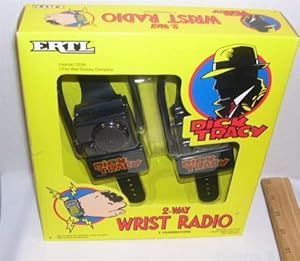 watch to market and its all because of smart phones.
Tuesday, 13 August 2013
Elon Musk's Hyperloop: The rise of the Open Source CEO?
The news of the publishing of Elon Musk's proposal for his Hyperloop transport proposal has spurred a bit of discussion on its feasibility, impact on mass transport and how it would fit within the wider market. While many different pieces have begun to discuss this in depth, reading Musk's 54 page published 'alpha' plan PDF, what has struck me is the way in which he has gone about releasing the idea and his approach to it being completed.Musk's last page show's his open approach to developing this idea, as he's putting the entire design and concept out for someone to implement with him. In interviews he's stated that Tesla and Space X is taking up his time (a rumored 100 hour work week) and that Hyperloop needs someone else to take up the challenge.
Thursday, 1 August 2013
How will Google Chromecast fit in the market?

The launch of Google’s Chromecast
aggressively opens a new avenue for the brand towards a presence in the
consumer’s living room. At $35, the HDMI dongle allows users to cheaply stream
content from Netflix, YouTube, Google Play, the Chrome browser and photos
albums to their TVs utilizing the Chrome Operating system. Unlike SMART TV
interfaces or connected devices which feature remotes and onscreen menus,
Chromecast uses a consumer’s existing devices as a second screen to control
it, meaning content can be streamed and controlled from Android phones and
tablets, iPhones, iPads and Chrome for Mac and Windows. The ability to stream
content to a Chromecast device happens within a second screen app, indicating
Google is relying on developers to add functionality to existing apps over
attempting to create native versions on their device. Google has positioned
Chromecast as a light weight, straightforward and affordable solution to
making any TV ‘smart’.
Tuesday, 9 July 2013
The Closing Innovation Gap or "Why Apple won't be innovative in 5 years time"
 |
| This is more innovative... |
Innovation has always meant different things depending on
who’s doing the innovating. Apple’s iPhone, Facebook and a myriad of
electronics companies creating ever clearer screens are all considered
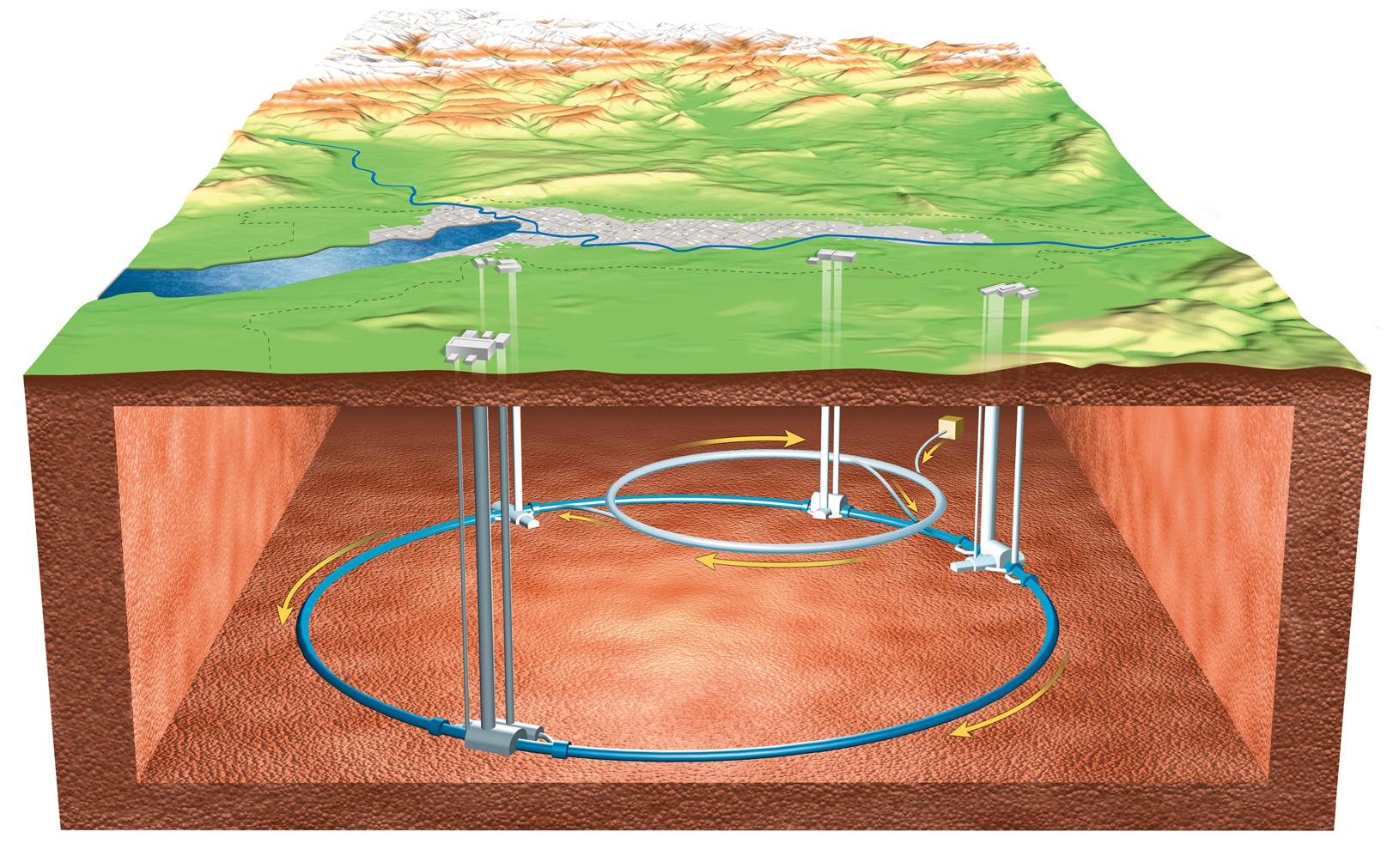
‘innovative’ in their own context. However, landing on the moon, the ISS,
mapping the human genome and finding evidence of the Higgs Boson are as well,
but NASA, CERN and others aren’t going to be front of mind when you ask a
consumer to name the most innovative groups they can think of. This is because
the scale at which we judge ‘innovation’ has historically always
 |
| Than this....right? |
In addition, the bigger the scale of an innovation, the
bigger the possibility a normal person on the street won’t see it as relevant
to their daily lives. Mapping the human genome may have required going through
3.3 million base pairs (and classifies as a mega
project), but the iPhone in a consumer’s hand has changed the way they
behaved in the last 5 years.
I’d wager which comes to mind first if asked to
describe innovation. The discrepancy between the innovation in the private
sector and the wider public sector delivers isn’t necessarily a bad thing for
anyone involved (unless you’re NASA asking for more funding) as it has shaped
the way both brands behave and consumers choose for quite some time, especially
within sectors such as consumer electronics. In short, the gap has caused consumer
focused companies to solve ‘smaller’ problems with innovation and the public
sector to solve ‘big’ ones through larger resource expenditure.
This relationship can be described as a scale: on one side,
you have companies such as Apple, Samsung, IBM, Google and Microsoft, which
deliver varying levels of small to midsized innovation relevant to consumers on
a regular basis. These companies iterate technological development sometimes
and leap ahead others, disrupting both the market and their competition for a
time when they do so. On the other side of this scale, you have governments,
large research organizations and others delivering large scale innovation at a
pace that is slower and less relative to consumers than ‘innovative’
companies. In between these two groups is a gap, which, at least so far in the age of
computing, has separated these segments as a nearly impassable barrier.
This ‘innovation gap’ kept companies from going too far away
from the consumer; as resource, business risk and time frames meant that
feasibility tied a private company’s ‘innovation’ to the consumer and what the
market would 'bear’. If a company goes just far enough from the market at the
right time to disrupt with innovation, you have Apple making the iPhone; go too
far and you have the Newton (apologies to the folk(s) still using these) or the
3DO (feel free to swap with the Atari Jaguar). Companies aim to place products as close to the 'gap' as possible, using communications to maneuver slightly and outpace the market in both product and perception. Alternatively, the public sector, to varying
degrees, operates on a mission to only solve the ‘big problems’ on the other
side of the gap, mostly because no one else is seen to be able to innovate on that scale.
In recent years however, technology, government funding and changes in the culture of organizations
 |
| Let's see how many people doubt the moon landing when you can go to low earth orbit on a consumer flight... |
The example of consumer opportunities around space travel
begs the question, “How innovative is being a smart phone maker, when Virgin
can shoot you into orbit and SpaceX is edging towards the Moon and Mars?” Space
travel by Virgin is much more relevant to the consumer than it was when NASA
did it and illustrates the risk and opportunity facing many tech brands today.
Brands are doing bigger and bigger things, closing the innovation gap each time
stories of their successes get out. Spacetravel, wearable computing and others
are being driven by the private sector and will continue to up the ante on
‘innovation’ that is not only relevant to the consumer, but delivering the
future they’ve long expected.
So why is a bridging perception of ‘innovation’ dangerous to
consumer brands? The halo of being an ‘innovative’ company can be the lifeblood
of a competitive advantage outside of the product itself, especially for tech
companies. Competing on features alone is costly and dangerous, meaning brand
is a vital tool to build. No one wants to buy old technology and buying from an
‘innovative’ brand speaks to the consumer’s perception that they will get a
reasonable amount of time before obsolescence from the product and thus value
for a premium.
 |
| Never bring an iPhone to a "balloon powered internet" fight... |
Its advances like this that support the claim that a company
like Apple won’t be seen as ‘innovative’,
at least in its current format, in 5 years time. Apple represents one of the
best examples of how tech companies currently do business and why this will
have to change as the innovation gap closes. Apple’s model is largely built on
iteration after the initial launch of a product, as seen with the iPhone. While
the phone itself initially laid out a clear consumer shift towards smart
phones, the following models have had relatively incremental upgrades. Features
such as Siri, Retina Display and the App Store were, for their respective
launches, ‘innovative’ by today’s market’s standards. However, when we hold
them against what companies with larger ambitions are doing, these features
begin to seem much less ‘innovative’. The growth of competitor market share in
Android and to a lesser extent Windows Phone also highlights how iteration alone
begins to erode an ‘innovative’ perception over time. As shown similarly with
the iPad, an initial dominance of a segment, in this case tablets, has been
eroded by competitors entering and replicating iterative feature releases. One
can wonder how minor improvements on a product yearly will stack up against a
competitor that makes a similar phone and has taught a car to drive.
It is this competitive pressure, coupled with the increasing
bar for ‘innovation’ that will force companies such as Apple to change if they
wish to maintain an ‘innovative’ perception or shift to succeed completely on other merits. While
these brands can handle the more ‘realistic’ side of the business well, using
various levels of iteration, they must work on using the organization and
communications to tell a bigger story about where the brand is going. These two
factors together, smaller tangible innovation and long term ‘big’ brand
innovation will begin to bridge closer, but can combine to provide a
competitive perception in both the short and long term.
To do this however, especially in consumer electronics, companies must change the way they tell
stories to consumers about their R&D and products. Long term roadmaps
shouldn’t be hidden as competitive advantage, but instead celebrated as ‘moon
shots’ in where the company states their role in moving technology forward over
the next 10 years. Brands that have the capability to start to develop the ‘big
innovations’ that position them as ‘thought leaders’ for the future should,
safe in the knowledge that the risk of revealing these ideas and experimenting openly will
be the cost of business going forward. In
our Apple example, one can only wonder what the brand’s story could be about
the future if it took a similar approach to more publicly developing it and going forward, this may be the required case. To reiterate from earlier, its not that Apple won't be making great things in 5 years, but given the changes in consumer perception, the company's culture of secrecy around a roadmap will have to change to maintain their brand image. The developer's conferences of old which served as reveals to the world of new found products and brand direction must give way to becoming continuous points in a journey of innovation, not discrete surprises.
Finally, while every brand isn't Apple, this theory works for any that get by on the perception of 'innovation'. Not every brand has to promise to put someone on the moon in 20 years time, but they should strive to make the same equivalent claim for their product sector if they want to keep up with the rising tide of ‘innovation’. Most every brand can tell a big story about doing big things if they want to, the challenge is doing it in a way where people will listen.
Finally, while every brand isn't Apple, this theory works for any that get by on the perception of 'innovation'. Not every brand has to promise to put someone on the moon in 20 years time, but they should strive to make the same equivalent claim for their product sector if they want to keep up with the rising tide of ‘innovation’. Most every brand can tell a big story about doing big things if they want to, the challenge is doing it in a way where people will listen.
Subscribe to:
Posts (Atom)

 Posts
Posts


