Showing posts with label Future projections. Show all posts

Tuesday, 9 July 2013

The Closing Innovation Gap or "Why Apple won't be innovative in 5 years time"


This is more innovative...

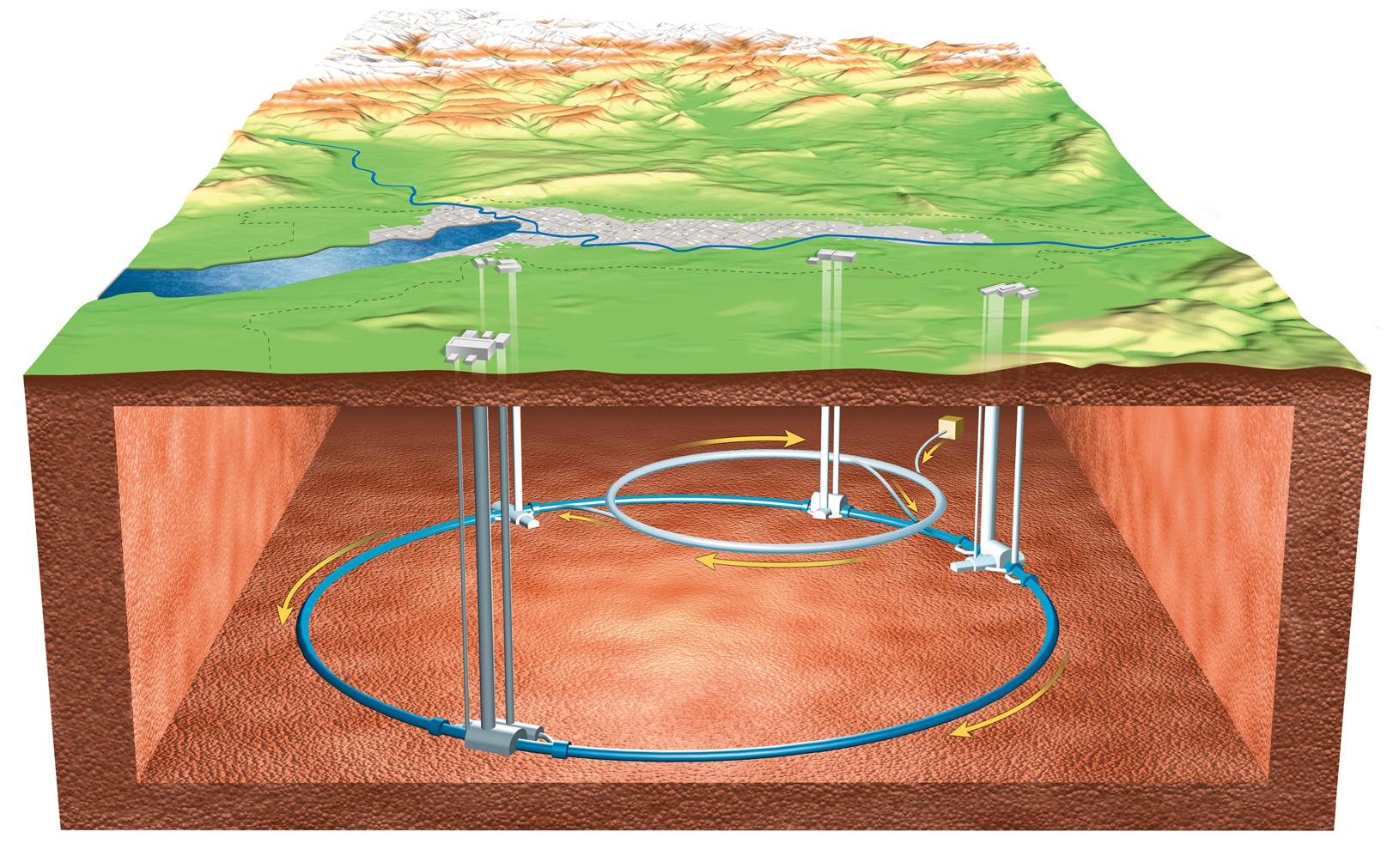
Innovation has always meant different things depending on who’s doing the innovating. Apple’s iPhone, Facebook and a myriad of electronics companies creating ever clearer screens are all considered ‘innovative’ in their own context. However, landing on the moon, the ISS, mapping the human genome and finding evidence of the Higgs Boson are as well, but NASA, CERN and others aren’t going to be front of mind when you ask a consumer to name the most innovative groups they can think of. This is because the scale at which we judge ‘innovation’ has historically always
Than this....right?
depended on who was delivering it. The bigger the organization, the bigger the innovation they can deliver and the bigger the requirement for it to be considered ‘innovative’ by the wider public.

In addition, the bigger the scale of an innovation, the bigger the possibility a normal person on the street won’t see it as relevant to their daily lives. Mapping the human genome may have required going through 3.3 million base pairs (and classifies as a mega project), but the iPhone in a consumer’s hand has changed the way they behaved in the last 5 years.
I’d wager which comes to mind first if asked to describe innovation. The discrepancy between the innovation in the private sector and the wider public sector delivers isn’t necessarily a bad thing for anyone involved (unless you’re NASA asking for more funding) as it has shaped the way both brands behave and consumers choose for quite some time, especially within sectors such as consumer electronics. In short, the gap has caused consumer focused companies to solve ‘smaller’ problems with innovation and the public sector to solve ‘big’ ones through larger resource expenditure.

This relationship can be described as a scale: on one side, you have companies such as Apple, Samsung, IBM, Google and Microsoft, which deliver varying levels of small to midsized innovation relevant to consumers on a regular basis. These companies iterate technological development sometimes and leap ahead others, disrupting both the market and their competition for a time when they do so. On the other side of this scale, you have governments, large research organizations and others delivering large scale innovation at a pace that is slower and less relative to consumers than ‘innovative’ companies. In between these two groups is a gap, which, at least so far in the age of computing, has separated these segments as a nearly impassable barrier.

This ‘innovation gap’ kept companies from going too far away from the consumer; as resource, business risk and time frames meant that feasibility tied a private company’s ‘innovation’ to the consumer and what the market would 'bear’. If a company goes just far enough from the market at the right time to disrupt with innovation, you have Apple making the iPhone; go too far and you have the Newton (apologies to the folk(s) still using these) or the 3DO (feel free to swap with the Atari Jaguar). Companies aim to place products as close to the 'gap' as possible, using communications to maneuver slightly and outpace the market in both product and perception. Alternatively, the public sector, to varying degrees, operates on a mission to only solve the ‘big problems’ on the other side of the gap, mostly because no one else is  seen to be able to innovate on that scale.

In recent years however, technology, government funding and changes in the culture of organizations
Let's see how many people doubt the moon landing
when you can go to low earth orbit on a consumer flight...
have seen this ‘innovation gap’ being closed. One only needs to look to SpaceX as an example of a tech company going out to solve problems that 10-15 years ago would have been clearly across the gap. While this may be a confluence of government bringing these organizations across and technology making new possibilities more accessible, such as in the case of Virgin Galactic, companies squarely associated with the consumer market are raising the bar on innovation across the gap.

The example of consumer opportunities around space travel begs the question, “How innovative is being a smart phone maker, when Virgin can shoot you into orbit and SpaceX is edging towards the Moon and Mars?” Space travel by Virgin is much more relevant to the consumer than it was when NASA did it and illustrates the risk and opportunity facing many tech brands today. Brands are doing bigger and bigger things, closing the innovation gap each time stories of their successes get out. Spacetravel, wearable computing and others are being driven by the private sector and will continue to up the ante on ‘innovation’ that is not only relevant to the consumer, but delivering the future they’ve long expected.

So why is a bridging perception of ‘innovation’ dangerous to consumer brands? The halo of being an ‘innovative’ company can be the lifeblood of a competitive advantage outside of the product itself, especially for tech companies. Competing on features alone is costly and dangerous, meaning brand is a vital tool to build. No one wants to buy old technology and buying from an ‘innovative’ brand speaks to the consumer’s perception that they will get a reasonable amount of time before obsolescence from the product and thus value for a premium.

Never bring an iPhone to a "balloon powered internet" fight...
The earlier space travel example may not illustrate a direct threat to Apple or Samsung’s dominance of the mobile phone market for example, but it does speak to the ethos of similar organizations that could be. Google [x], producers of the self-driving car, glass and more recently, project Loon are part of a direct competitor to Apple and while Google’s phones themselves don’t bear much resemblance to the tech featured in many moon shot projects, they do help to build the company as a brand that is innovative in a way that is bigger than competitors. This combination model of reality focused tech provider and future facing tech leader speaks to the way brands can build a perception of ‘innovation’ in years to come. Keeping one eye on ‘reality’ (as well as iterating current products at the pace of the market) can work in concert with doing ‘bigger things’ as a brand to speak to an organization’s thirst for innovation. Together this set-up uses a big vision, substantiated by long term projects featuring  less consumer relevance, as a sort of ‘halo’ product, speaking to the quality of more tangible, but less innovative, iterative products currently available.

Its advances like this that support the claim that a company like Apple won’t be seen as  ‘innovative’, at least in its current format, in 5 years time. Apple represents one of the best examples of how tech companies currently do business and why this will have to change as the innovation gap closes. Apple’s model is largely built on iteration after the initial launch of a product, as seen with the iPhone. While the phone itself initially laid out a clear consumer shift towards smart phones, the following models have had relatively incremental upgrades. Features such as Siri, Retina Display and the App Store were, for their respective launches, ‘innovative’ by today’s market’s standards. However, when we hold them against what companies with larger ambitions are doing, these features begin to seem much less ‘innovative’. The growth of competitor market share in Android and to a lesser extent Windows Phone also highlights how iteration alone begins to erode an ‘innovative’ perception over time. As shown similarly with the iPad, an initial dominance of a segment, in this case tablets, has been eroded by competitors entering and replicating iterative feature releases. One can wonder how minor improvements on a product yearly will stack up against a competitor that makes a similar phone and has taught a car to drive.

It is this competitive pressure, coupled with the increasing bar for ‘innovation’ that will force companies such as Apple to change if they wish to maintain an ‘innovative’ perception or shift to  succeed completely on other merits. While these brands can handle the more ‘realistic’ side of the business well, using various levels of iteration, they must work on using the organization and communications to tell a bigger story about where the brand is going. These two factors together, smaller tangible innovation and long term ‘big’ brand innovation will begin to bridge closer, but can combine to provide a competitive perception in both the short and long term.

To do this however, especially in consumer electronics, companies must change the way they tell stories to consumers about their R&D and products. Long term roadmaps shouldn’t be hidden as competitive advantage, but instead celebrated as ‘moon shots’ in where the company states their role in moving technology forward over the next 10 years. Brands that have the capability to start to develop the ‘big innovations’ that position them as ‘thought leaders’ for the future should, safe in the knowledge that the risk of revealing these ideas and experimenting openly will be the cost of business going forward.  In our Apple example, one can only wonder what the brand’s story could be about the future if it took a similar approach to more publicly developing it and going forward, this may be the required case. To reiterate from earlier, its not that Apple won't be making great things in 5 years, but given the changes in consumer perception, the company's culture of secrecy around a roadmap will have to change to maintain their brand image. The developer's conferences of old which served as reveals to the world of new found products and brand direction must give way to becoming continuous points in a journey of innovation, not discrete surprises.

Finally, while every brand isn't Apple, this theory works for any that get by on the perception of 'innovation'. Not every brand has to promise to put someone on the moon in 20 years time, but they  should strive to make the same equivalent claim for their product sector if they want to keep up with the rising tide of ‘innovation’. Most every brand can tell a big story about doing big things if they want to, the challenge is doing it in a way where people will listen.

Thursday, 9 May 2013

How do you market to a refrigerator: Smart devices and the upcoming ‘second market’ for advertisers?

The roles of connected devices are growing within our lives. From smart appliances to the refinement of in car computer connectivity, more and more of the objects we encounter daily allow for connectivity and control. However, what lies beyond this generation of smart devices may truly change the way we buy certain products as consumers and how marketers and advertisers drive purchase.

The next evolution of smart devices will not only allow connectivity and control, but will also predict what we need before we need it. The proliferation of the data sources available to connect to means that we are facing a possible revolution in the way we consider functionality. Whereas now, a smart washing machine may allow for a consumer to start it via mobile, in the near future we will expect this and more. When the appliance breaks we will not only expect a notification on our mobiles, but also for the device to have already sourced a list of local repairmen, found those that are available at the same time as you are (via your calendar) and recommended the best price for servicing.

Smart devices won’t only play a role in curating data to enable quicker consumer choices, but they may also take care of routine purchase. For example, a smart refrigerator could not only interface with the products within it to know when your routine purchases need replacing, but it could compare prices against online grocers, schedule times for delivery when you have indicated and use one or multiple suppliers to arrange the best price. This possibility of device led purchase begins to create a new market opportunity. Advertisers will need to drive more emotional, less routine product discovery and purchase through existing marketing channels to consumers, but more rational, information led purchase through smart devices as they grow in ubiquity.

The opportunities and changes posed by a growth in smart devices don’t apply universally across all products. Instead, the types of products and services affected are more mass and routine than luxury. Goods and services that heavily utilize emotional factors such as brand (e.g. luxury goods) or are ‘one-off’ purchases are unlikely to bear the brunt of a change in purchasing behaviour. However, for products grounded in at least a semi-rational and routine purchase, the growth of a comparable smart device (e.g. groceries and a refrigerator, clothing and a washing machine, servicing and appliances or a car, utilities and a home coordinating computer) creates two interconnected consumers: human and device.

For marketers focusing on these devices in the future, this shift means expanding information exchanges and connectivity to provide the largest footprint for connected devices to interface. Focusing on this mechanical market isn’t necessarily new for any agencies or brands, as any SEO will attest to. In fact, the same principles that have been important in driving site visibility within search engines will be important for reaching those connected devices that are informing or executing purchase online.

The presence that sells to a device doing routine shopping will not be a website, but an API, stripping away the trapping of design and style to provide pure, structured data on requested products and services. Successful APIs providing data will need to work quickly, provide timely results and interconnect with other data sources that can help tailor prices and products to make the most favourable rational conditions for a device. APIs will gain visibility through open standards and coordination with manufacturers, but will need more to differentiate.

Differentiation must come from APIs using data sources to make the most favourable rational ‘sell’ for searching devices, in similar way to how Sainsbury currently uses Nectar data. If APIs can predict which items a device will be looking for or when they are considering purchase, sales promotion activity can focus on lowering the rational cost of items at specific times, increasing the attractiveness of a retailer to a machine. Traditional direct marketing mechanics will still prove valuable, but your posted coupon pack may instead be emailed to your appliances. In addition, using data sources outside of just price can help to differentiate brands, such as using social data to prove quality through recommendations or scoring.

Consumer focused marketing may also change as smart devices becomes more refined. The focus on consumer marketing may narrow, moving away from direct response price-led messages aimed at driving frequency of purchase and instead just on driving initial trial. The goal of speaking to a consumer in essence becomes driving trial of a brand to get on a ‘repeat’ or ‘routine’ purchase list and then minimizing the reasons why the consumer would remove you from that set. If smart devices take over more of the routine and rational parts of purchasing, building a brand around a product becomes important only in initial trial and as a defensive move against other brands edging a product out of the ‘routine’ purchase set, ensuring that the consumer passively accepts the chance or recommendation of repeat purchase through a device.

For example, a car in need of servicing and connected to the internet may look at APIs providing information on the cost and availability of dealerships and mechanics to provide the service. The car’s driver may make the final decision on which available options are best, but will agree to the best priced option unless given another reason to, such as brand loyalty. In this example, brand still holds some sway, as a device is curating choices instead of executing them.

In a device led purchase example, the consumer behaviour is more passive, such as a connected fridge using several online grocers to complete the weekly shop; mixing and matching orders to get the cheapest and fastest possible combination of grocery deliveries. The role of the consumer is only to preclude certain grocers due to previous experiences or brand preference, but both of these motivations need to be more powerful than the default behaviour of accepting what has been suggested or ordered.

So should we expect direct mail addressed to your microwave coming shortly? Probably not. Quite a few things need to occur before this can become a reality. Manufacturers need to continue to drive development of smart devices, refining the experience and enhancing the variety of connectivity available in the consumer’s life. Consumers must make the smart device market more defined through adoption, as well as allowing their data to be accessed to enhance the predictive experience. Finally, advertisers and brands must give consumers a reason to share their data and redefine the way it is used, moving from warehousing and the privacy concerns it entails to a more just-In-time system of continuous access across various organizations.

While the challenges required in creating a generation of smart devices to curate and decide your purchases is numerous, it may not be as far off as you think. Google Now and apps such as Tempo have shown the value of predictive functionality while the required technology and data is rapidly becoming available, awaiting adoption. So, while its not yet be time to hold a refrigerator focus group about the latest Yeo Valley 30 second ad, it might be soon enough.

Friday, 20 January 2012

Media is the Future of Advertising...


Back in December, I was lucky enough to be able to speak at an event called "War of the Words" sponsored by Campaign Magazine. The event asked various speakers under 30 from four disciplines (media, planning, creative and brands) to address how their area was the best positioned to fix declining trust in advertising and generally be the future of the industry. While I didn't win, I did get to spend the day listening to some incredibly brilliant people and had a great time. Afterwards, I found this long-form version of my presentation and thought that it might be a good blog post to discuss with a wider audience. With that in mind, below is my rationale why Media (not in isolation but moreso than the other disciplines) is the future of advertising. 

Introduction

Predicting the future of advertising is pretty complex thing for multiple reasons. Uncertainty around consumer and business trends, technological innovation, economic fluctuations and new products are all things that add to the variability in assuming where we will be as an industry in 1,2 or 5 years.
Before I started to form my prediction though, I did some research. Now assuming this is a media-centric presentation, you may assume that the next few pages are going to be filled with TGI statements such as “I heavily consume period dramas on VOD” or “Drinking 6 pints in one sitting makes you a man – Strongly Agree” (*one of these isn’t an actual word for word statement), but instead I went out amongst the internet for answers. I asked a simple question (“In a few words, what is the future of advertising?”) at a sample of the places one might go for opinions on the internet: Facebook, Twitter, Yahoo! Answers, Quora and 4Chan. 

The quality of the answers varied predictably by the source, but several similar themes emerged. Answers such as: “NFC”, “Social Search” & “Micropayments” showed the optimism that technology will move advertising forward.  “Personalization”, “Benefitting Customers”, “Crowdsourcing” & “More relevant content” indicated that an increased, or re-established, focus on consumer value would be the key to the future of advertising. “Press Inserts”, “Second-Screen viewing”, “Traditional Media Resurgence”, “VOD” & “Mobile” all showed that certain people believe the future is here in some way already. “Brands as Content Curators”, “Media Agencies as Media Owners”, “Creative Technology” & “Dynamic Creative” all indicated that the future lies within content or creative for some. Finally answers like “Ninjas”, “Medical Marijuana” and various others showed that you probably shouldn’t ask the internet anything serious.

However, out of all the answers given to me on the future of advertising, one really stood out. It came from 4Chan’s “/ad v – Advice board” and simply said, “What the ******** kind of question is that?” Given that there was some other marketing related commentary under it, I think it was serious and this got me thinking, “What kind of question is it?” The future of advertising can mean many things and even though I’ve been charged with saying media will restore trust in advertising and drive the industry into the future, isn’t the question larger than that?

Advertising models: Then & Now

To clarify how big of a concept this is, it’s worth thinking about how advertising works now, but also how it did 100 years ago.  Back then, Dr. Walter Dill-Scott wrote a succinctly titled opus simply named, “The Psychology of Advertising: A Simple Exposition of the Principles of Psychology in Their Relation to Successful Advertising”. Now if you dig through the interesting syntax, some questionable publishing production values and a small bit of casual racism in some of the ad examples, you find that the way Dr. Scott envisioned principles to successful advertising isn’t too different than today. While parts of our industry have rapidly upgraded in technical values, the overall objective and framework remains the same.

Avoiding the advertising models (such as AIDA and others) I could use to describe advertising, I think it actually boils down to just three key things: “Spectacle”, a “Story” and an “Action”. Advertising at its heart is about the story, the interesting and creative vehicle which delivers a tale wrapped around a product or information. We use creativity and entertainment to make an otherwise hard to deliver story palatable, or even enjoyable, to the consumer. 

If this story is delivered well, we drive the consumer towards “action”. This action could be a variety of things: purchase, engagement or advocacy amongst others. All of it boils down to the power of the story to persuade the consumer to exchange something, be it time, social capital or resource.

Creating the “Spectacle”

However, the entire process cannot begin without the consumer’s attention, which is where the “spectacle” comes in. The “spectacle” is the cut-through, the attention grabbing mechanism and the story’s context. It is the reason we as people and consumers would stop, transfer our precious attention to something and consume the story. Without spectacle, as marketers, we are simply unnoticed raconteurs, standing on the street corner holding a placard with an interesting, but unengaged story on it.

This metaphor brings me to another story about spectacle and moves us forward to the 1960’s. In 1969, Dr. Stanley Milgram, of the famous electric shock obedience experiments (which would struggle to get through a uni’s research board without some persuasion today), conducted an experiment that proved generating a spectacle is less about a raconteur and more about 5 people. Now, this isn’t any 5 people specifically, but just 5 normal people and they provide a clear example of how media and advertising must operate.

Dr. Milgram placed 5 people on a random US city street corner, looking up silently at an unremarkable sky scraper. Without any extra interaction from the 5, he measured how many people would stop and join the group, in essence giving their attention to an otherwise unremarkable spectacle in their lives. He replicated the experiment with less and more people, finding that 5 generated a more significant response than smaller or larger groups up to 15 people; thus proving that if you want to market products OOH with random university students, 5 is your optimum number to bribe for the duration of the campaign with beer.

However, the experiment also stands as a great metaphor for the modern landscape of advertising and as an indicator of how consumers allocate their interest. As we all know, the lone consumer wandering through his daily existence isn’t just confronted with one group of 5 people creating a possible spectacle, but millions, which he engages with in a sometimes seemingly random manner. Dr. Milgram would be hard pressed to replicate the significant results he received from his experiment in the same landscape we exist in as advertisers.

So how do we cut through this diaspora of distraction? The answer still lies in our original and basic model. If we put spectacle against the four categories on debate: “creative”, “brands”, “planning” and “media”, we see that each has clear and important roles in success. Creative must tell the story in a way that builds on the generated spectacle and motivate the consumer to action. Brands must foster a clear image; deliver products that protect consumer trust and behave in a manner comparable to the story and spectacle that is created. Planning must deliver clear and actionable insight into the marketing story, coordinating the moving parts and marrying the interesting story with the context around it. Finally media must create and deliver the story through spectacle, generating a context that primes the consumer to act and engage with a similar story next time. If done correctly, these parts come together to create unified messaging to the consumer, coming across as one whole piece of communication.

The difficulty of creating this communication in our modern landscape isn’t without opportunity though. The metaphorical man on the street has provided us with more data about him or her than we have ever had in the history of marketing. Through digital and social media, we are sitting on a veritable glut of information, with Facebook alone serving as one of the most robust sociological databases and experiments in the history of man. With this information, we should be able to drill down to the mythical 1 to 1 marketing level; however, on the whole, we haven’t gotten close.

This is because the data itself isn’t straight forward or easily sortable. We have hundreds of data sources telling us different things about the same person. This shouldn’t entirely be a surprise though. If we look at the way consumers behave online, we know that even they don’t portray themselves in a uniform way. While consumers are providing us with the data itself to understand them, they aren’t making it easy.
A consumer’s behaviour is best described like an online dating profile, possibly the modern day pinnacle of personal marketing and information. A consumer’s real self juxtaposes his perceived self in situations like this. Going to the gym 5 times a week and enjoying museums may be what an individual states that he enjoys online, but this is only because bi-weekly jogging and Rambo 2 on DVD doesn’t mesh with his personal view of himself. Now given enough time, this perceived view will come crashing back to his real self, not from marketing in this situation, but from a conversation with interested women (who apparently can’t appreciate the sophistication of Stallone at his best).

This example shows the need to sort and vet the data provided by consumers to gain true value from it. To continue the metaphor, in 2006 on April Fool’s Day, Google claimed to launch “Google Romance” a solution to the “search problem that is dating”. This is pretty funny, until we consider that Google has probably had the best success at sorting out what we say and what we actually do online. You may say that you enjoy regular gym sessions, but I imagine by now the search engine has indexed your gym records at least a few times.

Why is consumer trust in advertising declining?

So how does this bring us into the situation facing the advertising industry today? Declining trust in advertising is a symptom of the consumer data exchange. Consumers have given us an opportunity in the form of their data and we have yet to do all we can with it. Consumer data exchange isn’t just an issue of privacy; it’s an issue of value as well.

Advertising hasn’t lived up to the data given to us, in the way we either create spectacle or tell the story to generate consumer value. Advances in consumer technology have driven the “action” part of our model (social media, mobile) but we have yet to marry these up to the rest of what tells a unified story. The unified communication model has not stayed ahead of the technological curve. We are beholden to external innovators (hardware and software manufacturers) focused on completely different objectives, instead of using our role as the consumer storyteller to drive technical adoption forward and refine the efficiency of how we advertise.

In order to close this gap, we must utilize consumer data in ways we have yet to consider fully, overcoming problems in sorting and analysis. We must tie together the advances in the “action” part of our model to create a more refined “spectacle” and a better, more relevant “story”. We must drive innovation forward where necessary and bring the consumer along with us, filling holes in innovation and delivering the unified communication experience of the future.

Media is the best placed area to move the advertising industry forward and fix the gap between what we are currently delivering and what consumers expect. Media can provide the personalized context that consumers want for the value exchange with their data. Media can drive the greatest relevance a brand’s story and help to create personalized stories. Media is increasingly able to generate additional sources of data about the consumer simply by being utilized. Media holds the largest role in generating engagement and action.

Consider this; the personalized OOH promised by so much in pop culture (such as in the much bandied example of Minority Report) is imminently achievable today. Combining Facebook photos, an OOH media owner with camera enabled digital screens and an API to encode photos with identity is all you need to roll out a wide spreading solution to personalized OOH. Technologically, we can leverage the personalization of online channels in traditional mediums today, all that holds us back is consumer acceptance to do so. While consumers want the future of advertising, we must gain the trust to deliver it and take them on a journey towards it. Media is the only one of the four sections considered that can generate a context that does this. Media is the main point of exposure for advertising and therefore the most powerful to take consumers on a journey towards a richer experience.  Creative, Brands and Planning all benefit from greater consumer data personalization to drive better performance, but they cannot manage or generate the data in the way that media can.

How do we do this?

So how does Media take the lead on this? In short, we must behave more like a “tech startup”, harnessing an entrepreneurial spirit, technical expertise and true data specialisms to create the insights and abilities consumers already expect us to have. This doesn’t mean utilizing innovative technology for advertising that only speaks to the early adopters, but instead taking innovation and integrating it in advertising in a way that makes it accessible, relevant and personalized.

Media agencies and agencies must move more into areas of innovation thought previously off limits. Agencies must begin to question the way we create “spectacle”, driving thinking forward through employee or even company acquisition in the technical sector. We must take those that innovate further up the stream and bring them down to focus on the messaging possibilities for consumers, as well as the use. Media owners must continue to innovate their formats, but they must do this at a faster rate. They must also ensure that the experience provided by new media technologies is a complete and simple one.
QR codes serve as a technology that proves where we are lagging behind as an industry. While we currently find these embedded in all manner of creative and media, the experience of engaging with them doesn’t offer a level of personalization or even ease of interaction that drives the value we deliver forward. QR reader’s possibilities are vast and not integrated into most consumer technology in a standard way. The key point for unlocking the basic interaction QR codes offer is lost if the reader penetration doesn’t deliver on its end.  The experience itself is contingent on fast mobile internet, something that only recently has media owners begun to ensure through wi-fi and other connectivity around enabled formats.  QR has grown to a quasi-viable format in recent years, but in the time it’s taken to do this, new technology stands poised to make it obsolete. NFC’s emergence will make the QR code nothing more than a missed opportunity to deliver greater messaging to consumers years earlier. QR codes would have benefitted from media owners and agencies working with hardware and technical firms to standardize the way consumers engage with it. Once we ensured the greatest level of adoption possible for the technology, we could have moved forward to test what possibilities existed for leveraging online consumer data through traditional formats enabled with the technology. Instead, we are faced with a stretch of possibility, as some consumers look to engage with QR, while others ignore it and early adopters may soon be better contacted through NFC enabled media. An aggressive stance towards tech innovation from the media industry can consolidate these groups of consumers, creating a standardized but innovative media and advertising experience.

To achieve a scale that avoids this problem, we must drive a technical innovation mentality through all parts of the media industry, from big agencies to small. No longer should we think that cutting edge digital innovation is purview of specialist agencies. We must bring that focus across the agency and marry it with a consumer focus and insight. We can no longer afford to be “digital” or “traditional” agencies, we must be committed to doing both in an aggressive way in both media and across advertising. We must pursue getting the best coding and technological talent into agencies that wouldn’t have recruited this role before. We must move towards driving an MIT media lab mentality in each of our commercial enterprises. The Future of Advertising and Media will only be realized when marketing & technology lives in agencies all over London, just as much as the Silicon Roundabout (or other aptly named areas).

Wednesday, 15 June 2011

Could Nintendo's Wii U finally make multi-screen TV viewing more social (for others in the room)?


Watching the Nintendo's E3 announcement this week, I was impressed, as I'm sure many others were, by their upcoming 'Wii U' system. Technically, the rumors swirling around the device are quite impressive, from its processing power (reported to be 30-100% more powerful than the PS3 or Xbox 360 depending on whom you ask) and the use of existing peripherals from the Wii, to the most impressive detail, its touchscreen controller which allows gaming without a television (streaming the game to the controller's 6 inch display). While the 'screen in the controller' trick isn't a new one (I'm looking at you Sega Dreamcast), this is the first time that a gaming experience can move from TV to handheld device and provide a reasonably identical experience.

While I could focus on the system's implications on gameplay, which include new levels of same room multiplayer, multiscreen movement of characters and even an inventory you can manage while in-play; I thought one of the greatest possible achievements for this system lies outside of the realm of traditional video gaming. Nintendo's Wii U may make ripples within game companies, but it stands to make larger waves throughout broadcasters, media owners and advertisers by advancing multi-screen TV  viewing.

To understand my hyperbole, its worth noting that multitasking while watching TV has become a rather common place thing. 42% of the American consumers admit to surfing the internet while watching television. Services such as Miso, Get Glue, Tunerfish & Intonow are allowing users to share what they are watching online. Twitter & Facebook buzz around 'appointment to view' content is expanding the conversation about what's being viewed, as it airs. These trends have moved the act of watching TV away from just consuming content from a single screen on one's own to a variety of experiences: with commentary, secondary angles, contests and networking around the viewing experience.


Despite all of these advancements however, the multi-screen TV viewing experience doesn't seem to translate well when there are families or multiple people in the same room. Apps such as Heineken's 'Star Player' for the 2011 Champion's League Final allowed viewers to compete against others to anticipate game outcomes, providing an interesting dual screen experience, but this translated more into a one to many dynamic, as opposed to a social experience with others in the room.A family of four could feasibly all use iPhones/iPads & laptops to create a dual screen experience for each person, but the experience would be far from standardized across devices and requires a large amount of money (I don't know how many families own four iPads).

Looking at sales of the Wii, it becomes clear that adoption of the new console may be the most cost effective solution to providing every member of a household a standardized dual screen experience, especially after the cost is justified against choosing a game console. From a development perspective, making applications with the functionality of Heinken's Star Player could be more efficient as it doesn't have to work across multiple platforms, just one. Finally, the Nintendo console and online gaming network provides the perfect distribution system for dual screen applications and experiences around programming. Apps could be accessed without interruping main screen TV viewing in a clear and familiar fashion.

While this may seem rather hypothetical, imagine media partnerships where X-Factor plays out on TV, while voting, replays and user commentary & videos are generated by each member of a viewing household independently from the controller. Imagine a Champions league final where each member of the household controls a different part of their favorite team, making decisions as individuals players on a family team against the rest of the UK. Game show viewing could become part of a richer gaming experience, pitting family members against each other to win the household. Crime dramas could become 'who done it' mysteries, with each household viewer conducting their own investigation in a dynamic game of Cluedo.

I think its important to point out that currently, most of these dual screen viewing experiences could feasibly be exectured, but to truly socialize it, something like the Wii U (or the offerings competitors respond with) is necessary. While it may not be the main focus of the console during launch, it looks like Nintendo, with the correct content/media partnerships, could un-intentionally be selling something more revolutionary than it first appears.